Ferrari 360 Manual Conversion: A Comprehensive Plan (as of 02/26/2026)
This guide details converting a Ferrari 360 to a manual transmission, referencing July 2025 statements by Enrico Galliera and the 2025 F1 season’s impact.
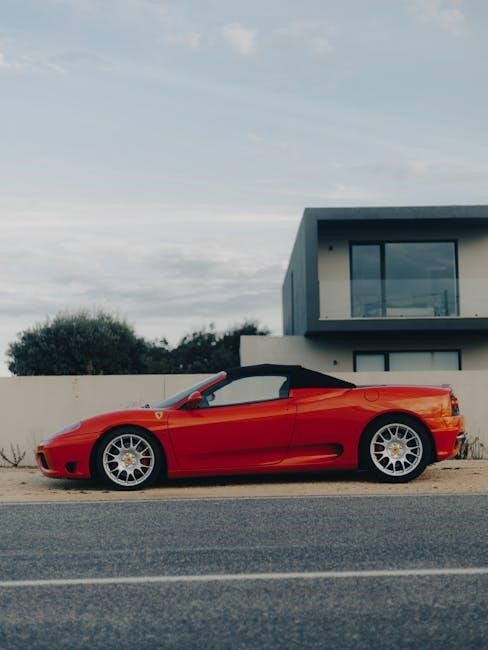
The Ferrari 360, celebrated for its design and performance, often faces criticism for its F1-style automated manual transmission. This comprehensive plan addresses the growing desire among enthusiasts to experience the 360 with a traditional manual gearbox. As of February 26, 2026, this guide details the entire conversion process, acknowledging recent discussions – like those reported by Evo in July 2025 featuring Enrico Galliera – regarding manual transmissions within Ferrari.
The resurgence of interest in driver engagement, potentially fueled by the excitement surrounding the 2025 Formula 1 season and its competitive landscape, has spurred this project. This document aims to provide a detailed roadmap for owners and mechanics considering this significant modification, covering everything from component sourcing to post-conversion maintenance.
II. Why Convert to Manual? – The Appeal & Benefits
The primary driver for converting a Ferrari 360 is enhanced driver engagement. Many enthusiasts prefer the direct control and immersive experience offered by a traditional manual transmission, a sentiment echoed in recent automotive discussions. While the F1 gearbox offers speed, it lacks the tactile connection desired by purists, especially given the renewed focus on driver skill highlighted by the thrilling 2025 F1 season.
Furthermore, a manual conversion addresses reliability concerns associated with the complex F1 system. Avoiding potential issues, as well as potentially increasing the vehicle’s long-term value, are key benefits. This modification aligns with a growing appreciation for classic driving experiences, mirroring Ferrari’s own considerations, as indicated by Enrico Galliera’s statements in July 2025.
III. Understanding the Ferrari 360’s Original Transmission
The Ferrari 360 originally featured a six-speed F1 automated manual transmission, a pioneering system for its time. Utilizing electro-hydraulic actuators, it offered rapid shifts without a traditional clutch pedal. This system aimed to blend the convenience of an automatic with the performance of a manual, appealing to a broader audience. However, its complexity introduced potential failure points, impacting long-term ownership.
Understanding this system is crucial before conversion. The F1 gearbox relies heavily on sensors and sophisticated control units. The 2025 F1 season’s emphasis on precision and reliability underscores the importance of robust drivetrain components, a quality often associated with traditional manual systems. Knowing its intricacies informs the conversion process and potential challenges.
III.A; The F1 Transmission: Design and Functionality
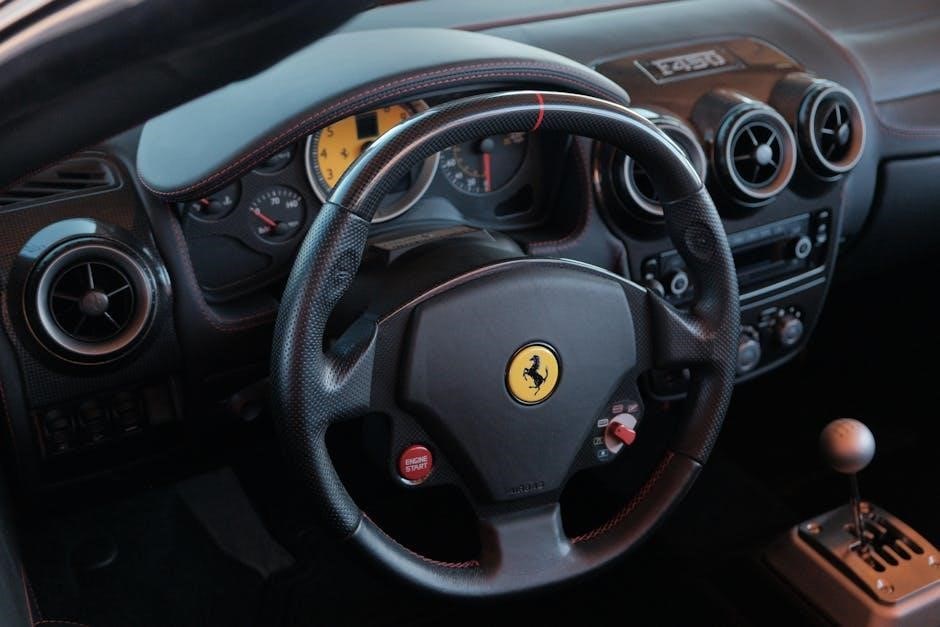
The 360’s F1 transmission employs a single-plate clutch operated by hydraulic actuators, controlled by the car’s electronic brain. Shifts are executed via steering wheel-mounted paddles, commanding the actuators to engage and disengage gears. This design prioritized speed and driver engagement, mimicking a professional racing experience. The system utilizes sensors monitoring speed, throttle position, and steering angle to optimize shift points.
Its functionality relies on precise hydraulic pressure and electronic signals. Like the precision demanded in the 2025 F1 season, consistent performance hinges on component health. Any deviation impacts shift quality and reliability. Understanding this intricate interplay is vital for diagnosing issues and preparing for a manual conversion.
III.B. Common F1 Transmission Issues & Reliability Concerns
The Ferrari 360’s F1 transmission, while innovative, suffers from several reliability issues. Hydraulic leaks within the actuator system are frequent, leading to slow or failed shifts. Wear on the clutch pack is another common problem, requiring expensive replacements. Sensor failures can also trigger erratic shifting behavior and warning lights.
These concerns are amplified by age and usage, mirroring the demanding conditions of the 2025 F1 season. The complexity of the system makes diagnosis challenging, often necessitating specialized tools and expertise. These recurring issues drive many owners to consider a manual conversion, seeking a more dependable and less costly drivetrain solution.
IV; Sourcing the Necessary Components
A successful Ferrari 360 manual conversion hinges on acquiring the correct parts. Compatible manual gearboxes are primarily sourced from the 355 or 348 models, demanding thorough inspection for wear. Locating a complete donor car offers the most comprehensive solution, though individual parts procurement is also viable.
Essential components include a suitable clutch, flywheel, and complete pedal assembly. Specialist Ferrari parts suppliers are crucial, alongside online marketplaces. Budget allocation must account for potential refurbishment costs. Considering the 2025 F1 season’s precision, component quality is paramount for a reliable conversion.
IV.A. Identifying Compatible Manual Gearboxes (355, 348)
The Ferrari 355 and 348 models provide the most readily adaptable manual gearboxes for a 360 conversion. However, direct fitment isn’t guaranteed; careful assessment of gear ratios and bell housing compatibility is essential. The 355 gearbox is generally preferred due to its closer ratios, enhancing driving engagement.
Thorough inspection for wear and tear is critical, focusing on synchro rings and bearings. Considering the precision demanded in the 2025 F1 season, gearbox condition directly impacts performance. Modifications to the driveshaft may be necessary to accommodate the different gearbox output flange.
IV.B. Locating a Suitable Donor Car or Parts Supplier
Sourcing components requires diligent searching. Donor cars – specifically 355 or 348 models – offer a complete package, but condition varies greatly. Specialist Ferrari parts suppliers, both online and brick-and-mortar, are crucial resources. Expect to pay a premium for verified, low-mileage components.
European suppliers often have wider selections, but shipping costs and import duties must be factored in. Given the excitement surrounding the 2025 F1 season, demand for these parts may increase. Thoroughly vet suppliers, checking reviews and verifying authenticity before committing to a purchase.
IV.C. Clutch, Flywheel, and Pedal Assembly Sourcing
These components are rarely available from donor cars in ideal condition. New, aftermarket clutches and flywheels designed for the 360 conversion are recommended for reliability. Pedal assemblies present a challenge; sourcing a complete, undamaged unit from a 355 or 348 is preferable, but refurbishment may be necessary.
Consider the impact of the 2025 F1 season on parts availability – increased interest in manual transmissions could drive up prices. Ensure compatibility with the chosen gearbox and flywheel. High-quality hydraulic lines and a master cylinder are essential for a smooth and reliable clutch operation.
V. The Conversion Process: A Step-by-Step Overview
The conversion begins with safely removing the F1 transmission, meticulously labeling all disconnected components. Chassis preparation involves modifying mounting points for the manual gearbox, requiring precise measurements and potentially welding. Installation demands careful alignment of the clutch, flywheel, and gearbox.
Pedal box installation and hydraulic line routing follow, ensuring proper functionality and leak prevention. Considering Enrico Galliera’s 2025 statements, preserving the car’s value during modification is key. Thorough testing after each stage is crucial, mirroring the precision of an F1 pit stop.
V.A. Removing the F1 Transmission & Related Components
Initial steps involve disconnecting the battery and draining all fluids – transmission oil, coolant, and potentially fuel lines. Carefully detach the F1 gearbox actuators, wiring harnesses, and the exhaust system to gain access. Support the engine securely before removing the driveshaft and transmission mounts.
Lowering the F1 transmission requires patience and potentially lifting equipment. Label every connector and hose for reassembly, documenting the process thoroughly. Remembering the 2025 F1 season’s precision, meticulous organization is vital. Store removed components safely, preparing the chassis for the manual conversion.
V.B. Preparing the Chassis for the Manual Gearbox
After F1 component removal, inspect the chassis for necessary modifications. This often includes welding reinforcement plates around the manual gearbox mounting points, ensuring structural integrity. Considering Enrico Galliera’s views on driver engagement, a solid foundation is crucial.
Carefully measure and align the new gearbox position, verifying clearance with the chassis and drivetrain components. Modifications may be needed for the driveshaft length or exhaust routing. Prepare the area for the clutch cable or hydraulic line, and ensure adequate space for the shifter mechanism. Precision is key, mirroring the focus of the 2025 F1 teams.
V.C. Installing the Manual Gearbox, Clutch, and Flywheel
With the chassis prepared, carefully install the flywheel, ensuring correct torque specifications. Next, mount the clutch assembly, aligning it precisely with the crankshaft. Reflecting the precision of the 2025 F1 season, accuracy is paramount.
Lower the manual gearbox into position, aligning the input shaft with the clutch disc. Securely mount the gearbox to the chassis using the reinforced mounting points. Double-check all connections and fasteners. This stage demands patience and attention to detail, mirroring the dedication seen in Ferrari’s engineering, as highlighted by figures like Enrico Galliera.
V.D. Pedal Box Installation & Hydraulic Line Routing
Install the manual pedal box, ensuring secure mounting and proper alignment for optimal driver comfort and control. Route the hydraulic lines for the clutch, connecting them to the master cylinder and slave cylinder. Similar to the strategic precision of the 2025 F1 season, careful routing prevents interference and ensures smooth operation.
Bleed the hydraulic system thoroughly to remove any air bubbles, guaranteeing a firm pedal feel. Double-check all connections for leaks. This step is crucial for reliable clutch engagement, echoing the reliability standards upheld by Ferrari, as discussed by Enrico Galliera. Proper installation is vital for a seamless driving experience.
VI. Electronic Modifications & ECU Tuning
Disabling the F1 system warnings is paramount, requiring careful software intervention to prevent persistent error messages on the dashboard. ECU remapping is essential for manual transmission compatibility, adjusting parameters like fuel delivery and ignition timing. This process optimizes performance and ensures smooth engine operation, mirroring the fine-tuning seen in the 2025 F1 season.
Consider the insights from Enrico Galliera’s July 2025 statements regarding Ferrari’s approach to driver engagement. The ECU tune must account for the different driving characteristics of a manual gearbox. Thorough testing and validation are crucial to avoid any adverse effects on engine reliability or performance.
VI.A. Disabling F1 System Warnings & Error Codes
Successfully disabling the F1 system’s error reporting is critical post-conversion. The Ferrari 360’s ECU constantly monitors the F1 components; removal necessitates preventing persistent dashboard warnings. This isn’t a simple matter of unplugging sensors – sophisticated software intervention is required, often involving a custom ECU tune.
Consider the evolving landscape, as highlighted by Enrico Galliera’s July 2025 comments on driver preference. Ignoring these warnings impacts the driving experience. Skilled technicians utilize diagnostic tools to identify and suppress the relevant error codes, ensuring a clean and functional instrument cluster.
VI.B. ECU Remapping for Manual Transmission Compatibility
ECU remapping is paramount for a seamless manual conversion. The original software is calibrated for the F1 gearbox; adapting it for a manual requires significant adjustments to throttle response, fuel mapping, and crucially, removing F1-specific parameters. This process ensures optimal performance and prevents drivetrain conflicts.
Considering the renewed interest in driver engagement, mirroring trends seen in the 2025 F1 season, a skilled tuner will tailor the map to your driving style. Ignoring this step leads to suboptimal performance and potential engine damage. Proper remapping also addresses any lingering F1 system warnings, complementing the disabling process.
VII. Drivetrain & Differential Considerations
The Ferrari 360’s differential, originally paired with the F1 transmission, generally remains compatible with a manual swap, but inspection is crucial. Verify its condition and ensure proper lubrication. Consider the driveshaft length; modifications might be necessary to accommodate the new gearbox position, maintaining optimal angles for efficient power delivery.
Reflecting the precision demanded in both road cars and the 2025 F1 season, drivetrain alignment is vital. Any misalignment introduces vibrations and stress. Evaluate the existing half-shafts for compatibility and strength, potentially upgrading them for increased durability, especially with performance-oriented driving in mind.
VIII. Potential Challenges & Troubleshooting
Manual conversions often present unforeseen hurdles. Shifter alignment can be tricky, requiring precise adjustments for a satisfying throw, mirroring the driver control sought in the 2025 F1 season. Clutch hydraulics demand meticulous bleeding to eliminate air bubbles, ensuring consistent pedal feel and engagement.
ECU compatibility issues may arise, triggering warning lights or limiting engine performance; careful remapping is essential. Driveshaft vibrations, stemming from misalignment, necessitate thorough inspection and correction. Be prepared for iterative adjustments – a successful conversion demands patience and a systematic approach to problem-solving.
VIII.A. Shifter Mechanism Issues & Adjustments
Precise shifter alignment is paramount for a satisfying driving experience, akin to the control demanded in the fast-paced 2025 Formula 1 season. Common issues include imprecise gate selection, requiring careful adjustment of linkage rods and bushings. Binding or excessive play can necessitate replacing worn components or modifying mounting points.
Ensure proper travel and throw are achieved for each gear, mirroring the deliberate actions of a skilled F1 driver. Consider aftermarket short-throw shifters for enhanced responsiveness. Thorough testing and iterative adjustments are crucial to eliminate any vagueness and achieve a direct, connected feel.
VIII.B. Clutch Hydraulics & Bleeding Procedures
A properly functioning clutch hydraulic system is vital for smooth gear changes, demanding precision similar to the quick shifts seen in the 2025 F1 races. Air in the system causes a spongy pedal feel and engagement issues, requiring a thorough bleeding process. Use DOT 4 brake fluid specifically formulated for high-performance applications.
Employ a pressure bleeder or manual pumping method, ensuring all air bubbles are expelled from the master and slave cylinders. Inspect lines for leaks and replace any damaged components. Monitor fluid levels throughout the process. Proper bleeding is essential for optimal clutch performance and driver confidence.
IX. Cost Breakdown: Estimating the Total Conversion Expense
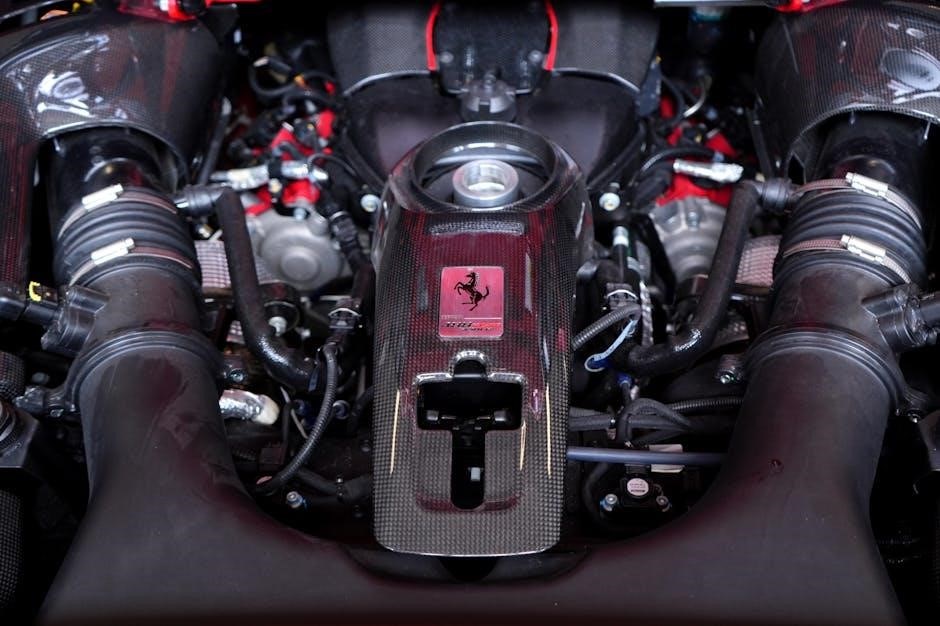
A Ferrari 360 manual conversion is a significant investment. Expect costs ranging from $15,000 to $30,000+, depending on component sourcing and labor rates. The gearbox itself ($5,000 ⎯ $10,000) is a major expense, alongside a new clutch and flywheel ($1,500 ⎻ $3,000). Pedal assembly and hydraulic lines add $1,000 ⎯ $2,000.
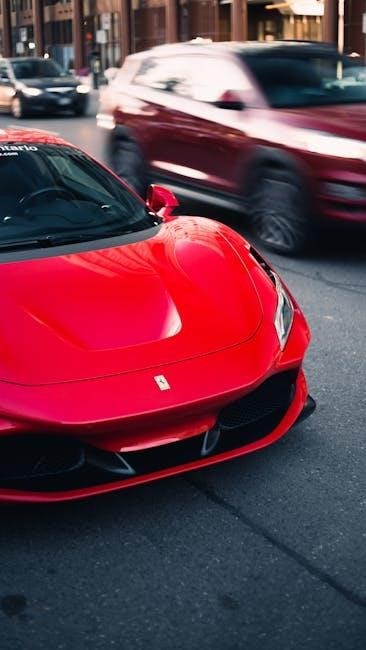
ECU tuning and electronic modifications can cost $1,000 ⎯ $2,500. Labor charges, potentially exceeding $5,000 ⎻ $10,000, depend on mechanic expertise. Unexpected issues and parts replacements can inflate the budget. Careful planning and sourcing are crucial for managing expenses effectively.
X. Legal & Insurance Implications of the Conversion
Modifying a Ferrari 360 with a manual transmission presents legal and insurance challenges. Verify local regulations regarding vehicle modifications; some jurisdictions require inspections and approvals. Inform your insurance provider immediately, as a significant modification alters the vehicle’s risk profile. Expect potential premium increases or policy adjustments.
Failure to disclose the conversion could invalidate your insurance coverage in case of an accident. Document all modifications meticulously for legal and insurance purposes. Consider a vehicle appraisal post-conversion to reflect the changes and ensure accurate valuation.
XI. Finding Qualified Mechanics & Conversion Specialists
A Ferrari 360 manual conversion demands specialized expertise. General mechanics often lack the necessary experience with exotic cars and complex transmissions. Seek technicians familiar with Ferrari’s F1 systems and manual gearbox installations. Online forums and Ferrari clubs are excellent resources for recommendations.
Verify the mechanic’s credentials and experience specifically with 360 conversions. Request references from previous clients. Discuss the project scope and timeline thoroughly before committing. Ensure the specialist understands the electronic modifications and ECU tuning required for a seamless integration.
XII. Post-Conversion Maintenance & Servicing
Following a Ferrari 360 manual conversion, diligent maintenance is crucial. Regular gearbox oil changes are paramount, using a fluid specifically designed for the installed transmission (355 or 348). Inspect clutch hydraulics frequently for leaks and proper operation. Monitor the ECU tune for optimal performance and address any error codes promptly.
Schedule routine checks with a specialist familiar with the conversion. Pay attention to shifter feel and adjust as needed. Consider the impact of the 2025 F1 season’s demands on component stress and plan accordingly. Maintain detailed service records for future reference and resale value.
XIII. Performance Impact: What to Expect After the Conversion
A manual conversion typically enhances driver engagement and provides a more visceral Ferrari 360 experience. Expect slightly altered acceleration times, potentially quicker with skilled shifting, though this depends heavily on the gearbox and ECU tune. The removal of the F1 system’s weight contributes to improved handling and balance.
Consider the influence of the 2025 F1 season’s focus on driver skill; a manual 360 mirrors this connection. Precise gear changes unlock the engine’s full potential. Enrico Galliera’s statements regarding manual transmissions reflect a renewed appreciation for driver control, which this conversion delivers.
XIV. Community Resources & Forums for 360 Owners
Dedicated online forums are invaluable for Ferrari 360 manual conversion support. FerrariChat.com hosts extensive threads detailing experiences, parts sourcing, and troubleshooting. Specific conversion groups within these forums offer focused advice from those who’ve completed the process.
Leverage the collective knowledge regarding compatible gearboxes (355, 348) and ECU tuning. Social media groups on platforms like Facebook provide real-time discussions and visual progress updates. Remember the 2025 F1 season’s spirit of collaboration; apply it here. Enrico Galliera’s views on driver engagement resonate within these communities.
XV. Enrico Galliera’s Statements on Manual Ferraris (July 2025)
In July 2025, Evo magazine reported on comments from Ferrari’s Chief Marketing and Commercial Officer, Enrico Galliera. When questioned about the possibility of future manual-transmission Ferraris during the Amalfi reveal, his response fueled debate amongst enthusiasts. While not a definitive commitment, his acknowledgement of demand resonated with those pursuing 360 conversions.
Galliera’s statements indirectly validate the desire for a more connected driving experience, mirroring the appeal of manual conversions. The ongoing 2025 F1 season highlights driver skill, further emphasizing the value of driver control. This sentiment supports the growing trend of restoring manual engagement to modern Ferraris;
XVI. Impact of F1 Racing on Manual Transmission Interest
The resurgence of competitive racing in the 2025 F1 season, resuming at the Dutch Grand Prix, has subtly amplified interest in driver-focused experiences. This heightened awareness of driver skill and control directly correlates with the appeal of manual transmissions. For Ferrari 360 owners considering conversion, the F1 spectacle reinforces the desire for a more visceral connection to their vehicle.
The battles between teams like McLaren showcase the importance of precise inputs, mirroring the engagement offered by a manual gearbox. This renewed focus on driver involvement fuels the demand for conversions, offering a purist driving experience.
XVII. Long-Term Reliability of Converted Manual 360s
Assessing the long-term reliability of a converted Ferrari 360 requires careful consideration. While the core 360 platform is robust, the integration of a manual gearbox introduces potential stress points. Proper installation, utilizing quality components sourced from compatible 355 or 348 models, is paramount. Regular inspections of the clutch hydraulics and shifter mechanism are crucial for preventative maintenance.
ECU tuning plays a vital role; incorrect mapping can strain the drivetrain. Owners should prioritize experienced conversion specialists to minimize future issues and ensure lasting performance, mirroring the precision seen in the 2025 F1 season.
XVIII. Alternatives to Full Conversion: Short Shifters & Mods
For owners hesitant about a complete manual conversion, several modifications can enhance the driving experience without the extensive work. Installing a short-shift kit dramatically improves gear change speed and feel, offering a more engaging connection to the F1 transmission. Upgraded shift paddles can also provide a more tactile response.
ECU remaps focused on throttle response and shift points can mimic some characteristics of a manual system. These options provide a cost-effective route to a sportier feel, acknowledging Enrico Galliera’s comments on driver preference, while retaining the original F1 system’s convenience.
XIX. Detailed Parts List with Estimated Prices
A comprehensive manual conversion requires sourcing numerous components: a compatible gearbox (355/348 ⎻ $2,500 ⎻ $5,000), clutch kit ($800 ⎯ $1,500), flywheel ($500 ⎻ $1,000), pedal assembly ($600 ⎯ $1,200), and shift linkage ($300 ⎻ $600). Expect to spend $1,000 ⎻ $2,000 on custom driveshafts and modifications.
ECU tuning and wiring harness adaptation will add $800 ⎯ $1,500. Don’t forget fluids, hardware, and potentially a new differential ($1,500 ⎯ $3,000). These prices are estimates and fluctuate based on condition and supplier, reflecting the demand influenced by interest sparked by events like the 2025 F1 season.
XX. Wiring Diagrams & Technical Schematics
Successful conversion hinges on accurate wiring integration. Detailed schematics are crucial for disabling the F1 system’s error codes and integrating the manual transmission’s sensors. These diagrams illustrate the necessary bypasses and connections, often requiring modification of the existing Ferrari 360 wiring harness.
Schematics cover the clutch switch, reverse light, and gear position sensors. Accessing these resources often involves specialist forums and conversion specialists. Understanding the ECU’s pinouts is vital for remapping, influenced by the evolving landscape of Ferrari technology, as noted in July 2025 discussions.
XXI. Future Trends in Ferrari Manual Conversions
The demand for manual Ferrari 360 conversions is likely to grow, fueled by renewed interest sparked by the 2025 F1 season and statements from Ferrari’s Enrico Galliera regarding manual transmissions. Expect advancements in plug-and-play wiring harnesses, simplifying the electronic integration process.
3D-printed adapter plates and custom ECU tuning solutions will become more accessible. Furthermore, improved shifter mechanisms and clutch hydraulics are anticipated. The community’s shared knowledge, documented in online forums, will drive innovation, making conversions more refined and reliable, mirroring the precision seen in Formula 1.