
Loom knitting offers a fantastic avenue for crafting diverse stitches, and numerous resources, including PDFs, showcase patterns. Discover tutorials and free loom knitting stitch patterns!
Knitting on a loom adapts familiar stitches based on yarn wrapping techniques, offering a unique approach to textile creation, readily available in PDF format.
What is Loom Knitting?
Loom knitting is a method of creating fabric by using a knitting loom – a frame with pegs used to interlock yarn strands. Unlike traditional knitting with two needles, a loom simplifies the process, making it accessible for beginners and those seeking a faster crafting experience. It’s a surprisingly versatile technique, capable of producing a wide array of stitches and projects.
Essentially, yarn is wrapped around the pegs in specific patterns, creating loops that are then pulled through each other to form a knitted fabric. The beauty lies in its simplicity; you don’t need to master complex needle maneuvers. Many resources, often available as PDFs, detail various loom knitting stitches, from basic knit and purl to more intricate designs like rib stitch and seed stitch.
These PDF guides often include step-by-step instructions and visual aids, making it easy to learn new techniques. The technique allows for both flat and circular projects, expanding creative possibilities. Exploring loom knitting stitches through PDFs unlocks a world of patterns and project ideas!
Benefits of Using a Knitting Loom
Knitting looms offer numerous advantages, particularly for beginners or those seeking a more relaxed crafting experience. They eliminate the dexterity required for traditional needle knitting, making it easier to create consistent stitches. Speed is another key benefit; projects often work up much faster on a loom. This efficiency is amplified when utilizing readily available PDF guides showcasing various loom knitting stitches.
Furthermore, looms are portable and require minimal equipment, making them ideal for crafting on the go. The consistent peg spacing ensures uniform tension, resulting in neater fabric. Accessing loom knitting stitch patterns in PDF format provides a wealth of inspiration and detailed instructions, simplifying complex designs.
These PDF resources often include video tutorials, further enhancing the learning process. Whether you’re creating scarves, hats, or blankets, a loom and a collection of stitch PDFs empower you to explore your creativity with ease and efficiency.
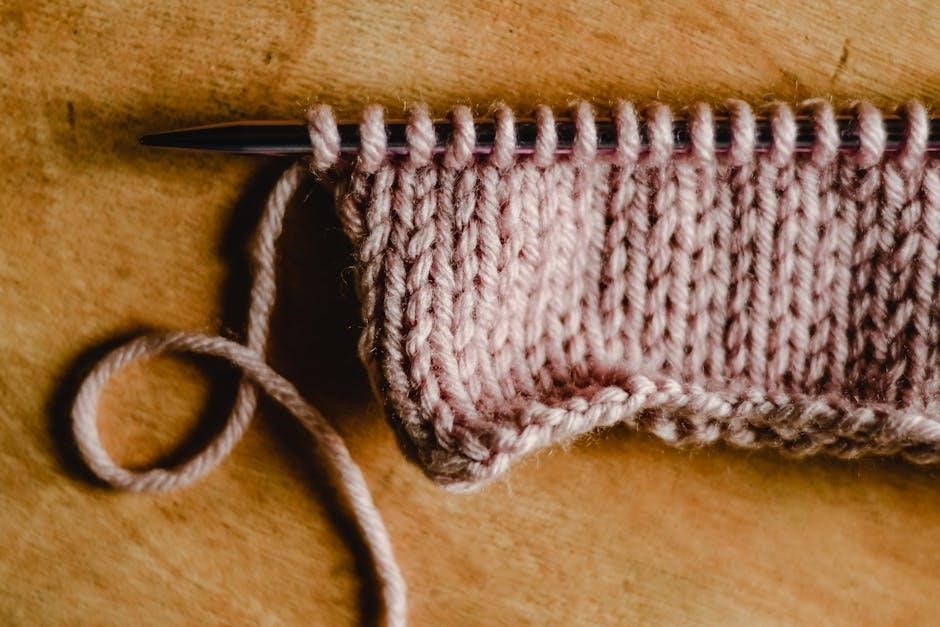
Basic Loom Knitting Stitches
Loom knitting begins with foundational stitches, easily learned through PDF guides. Explore simple techniques and free loom knitting stitch patterns for beginners!
Knit Stitch – The Foundation

The knit stitch is absolutely fundamental to loom knitting, serving as the building block for countless projects. Mastering this stitch unlocks a world of possibilities, and thankfully, learning it is remarkably straightforward. Numerous PDF resources and video tutorials detail the process, often demonstrating the wrap, pull-through method on various loom sizes.
Essentially, you wrap the yarn around a peg, then pull the wrapped yarn through the loop created on the previous row. This creates a ‘v’ shape, characteristic of knitted fabric. Many free loom knitting stitch patterns available as PDF downloads begin with instructions for the basic knit stitch, emphasizing consistent tension for a neat appearance.
Beginners will find that practicing this stitch repeatedly, referencing a PDF guide for visual clarity, quickly builds muscle memory. It’s the core technique used in garter stitch and forms the basis for more complex patterns. Understanding the knit stitch is truly the first step on your loom knitting journey!
Purl Stitch – Creating Texture
The purl stitch, while seemingly simple, introduces a beautiful textural element to loom knitted projects. It’s essentially the reverse of the knit stitch, creating a bumpy, ridged surface. Finding clear instructions, often in PDF format, is key to mastering this technique, as the wrapping and pulling motions differ slightly.
Unlike the knit stitch, which pulls the yarn through the loop, the purl stitch involves bringing the yarn around the peg and then pulling it through. Many loom knitting stitch pattern collections, available as PDF downloads, demonstrate this with detailed photographs and step-by-step guides.
Combining knit and purl stitches opens up a vast range of design possibilities, including ribbing and more intricate patterns. Several online resources offer free PDFs specifically focused on purl stitch variations for looms. Consistent practice, guided by a visual PDF, will quickly build your confidence and skill.

Garter Stitch – Simple and Versatile
The garter stitch is arguably the most beginner-friendly loom knitting stitch, and a cornerstone for many projects. It’s created by simply knitting every row – a straightforward process easily visualized through PDF tutorials. This simplicity doesn’t diminish its versatility; it’s perfect for scarves, blankets, and even more complex designs.
Because every row is knitted, the garter stitch creates a beautifully textured fabric with horizontal ridges. Numerous free loom knitting stitch pattern websites offer PDFs demonstrating this basic technique, often alongside variations for different loom sizes.
Its inherent stability means it doesn’t curl at the edges, making it ideal for projects where a neat finish is essential. Many PDF pattern collections include garter stitch-based designs, showcasing its adaptability. Mastering the garter stitch is the first step towards unlocking a world of loom knitting possibilities.
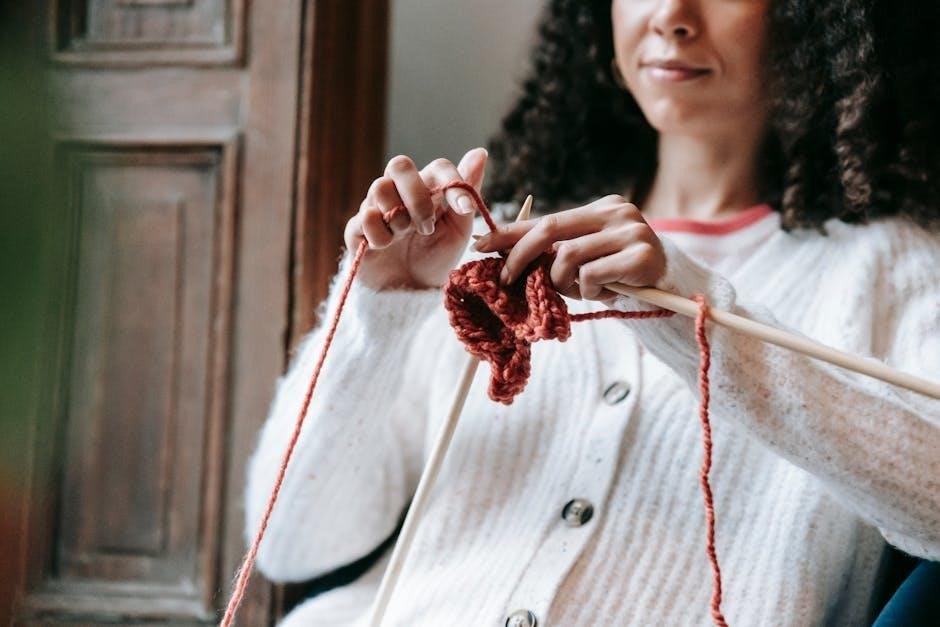
Intermediate Loom Knitting Stitches
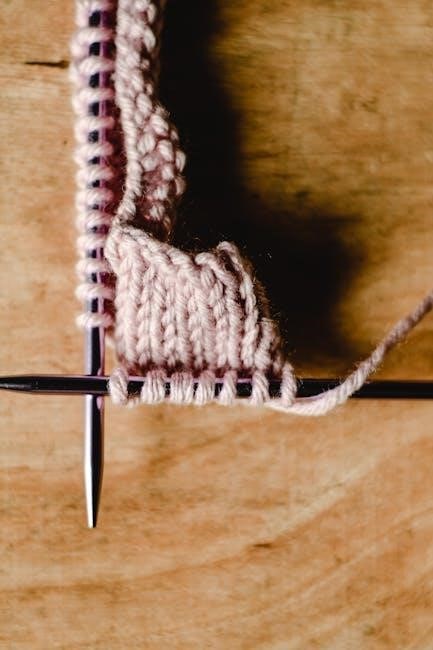
Intermediate stitches build upon the basics, offering texture and design complexity. Explore PDFs for rib, seed, and linen stitches, expanding your loom knitting skills!
Rib Stitch – For Elasticity and Definition
The Rib Stitch, a cornerstone of loom knitting, is celebrated for its inherent elasticity and ability to define shapes within projects. This stitch creates a fabric with vertical ribbed lines, making it ideal for cuffs, brims of hats, and edges of blankets where a snug, flexible finish is desired.
Achieving the rib stitch on a loom involves alternating knit and purl stitches (though purling on a loom is often a variation of wrapping). Numerous PDF resources detail specific wrapping techniques for creating this effect on both round and long looms. These PDFs often include visual guides, step-by-step instructions, and variations to customize the width and depth of the ribbing.
Beginners will find loom knitting stitch pattern PDFs particularly helpful, as they break down the process into manageable steps. More advanced knitters can explore PDFs showcasing complex rib patterns, such as twisted rib or cable rib (simulated on a loom), adding sophisticated texture to their creations. The availability of these PDFs makes mastering the rib stitch accessible to all skill levels.
Seed Stitch – Textured and Dense Fabric
The Seed Stitch, known for its beautifully textured surface, is a popular choice for loom knitters seeking a dense and durable fabric. This stitch creates a subtle, bumpy texture resembling seed heads, adding visual interest to projects like scarves, washcloths, and baby blankets. Its dense nature also makes it excellent for items requiring warmth and structure.
On a knitting loom, the seed stitch is typically achieved by alternating knit and purl stitches in each row, with the pattern offset in subsequent rows. Fortunately, many PDF resources are available, providing detailed instructions and visual aids for mastering this technique. These loom knitting stitch pattern PDFs often demonstrate how to adapt the stitch for both round and flat looms.
Finding a comprehensive PDF guide will clarify the wrapping process and ensure consistent stitch definition. Some PDFs even offer variations, like the double seed stitch, for an even more pronounced texture. These downloadable resources empower knitters of all levels to confidently create stunning seed stitch projects.
Linen Stitch – A Classic Look
The Linen Stitch, a timeless favorite among knitters, offers a beautiful, woven-like texture reminiscent of linen fabric. This stitch is prized for its clean, crisp appearance and versatility, making it suitable for a wide range of projects, from dishcloths and blankets to garments and accessories. It’s a fantastic choice for those seeking a classic, understated aesthetic.
Achieving the Linen Stitch on a loom involves a specific wrapping pattern, typically alternating knit and purl stitches across each row. Thankfully, numerous PDF tutorials and loom knitting stitch pattern guides are readily available online. These resources often include step-by-step photos and video demonstrations, simplifying the learning process.
Many PDFs detail how to execute the Linen Stitch on both long and round looms, providing adaptable instructions for various project types. Look for PDFs that clearly illustrate the “yarn in front” technique, crucial for achieving the stitch’s characteristic texture. Downloadable patterns often include variations and project ideas, inspiring creativity.
Advanced Loom Knitting Techniques & Stitches
Advanced techniques, like twisted knit and simulated cables, elevate loom knitting. Explore detailed PDFs for intricate patterns and expanded stitch libraries!
Twisted Knit Stitch – Adding Visual Interest
The Twisted Knit Stitch introduces a subtle yet captivating texture to your loom knitted projects, moving beyond the standard knit appearance. This stitch is surprisingly simple to execute, involving a slight adjustment to how you wrap the yarn around the loom pegs. Instead of wrapping in the usual manner, you lift the bottommost strand on the last peg wrapped, creating a twist.
Many PDF resources and online tutorials demonstrate this technique visually, making it easy to learn even for beginners. These PDFs often include step-by-step photographs and clear instructions, ensuring a successful outcome; The resulting fabric has a lovely, slightly denser feel and a visually appealing, textured surface. It resembles a more traditional knit stitch, offering a refined look to scarves, hats, and blankets.
You can find numerous free and paid loom knitting stitch pattern PDFs online that specifically feature the Twisted Knit Stitch, often combined with other techniques for even more complex designs. Experimenting with different yarn weights and colors will further enhance the visual impact of this versatile stitch.
Honeycomb Stitch – Intricate Pattern
The Honeycomb Stitch, despite its complex appearance, is achievable on a loom with patience and the right guidance. This stitch creates a beautiful, raised pattern reminiscent of a honeycomb’s hexagonal cells, adding significant texture and visual depth to your projects. It’s a fantastic choice for blankets, cushions, or any item where you want a striking, three-dimensional effect.
Numerous loom knitting stitch pattern PDFs detail the process, often breaking it down into manageable rows and rounds. These PDFs are invaluable, providing clear diagrams and step-by-step instructions to navigate the alternating knit and purl-like wraps required. Understanding the wrap sequence is key to achieving the characteristic honeycomb texture.
While more challenging than basic stitches, the Honeycomb Stitch is incredibly rewarding; Online resources and PDF tutorials frequently offer video demonstrations, further simplifying the learning process. Experiment with different yarn colors to accentuate the honeycomb pattern and create truly unique pieces.
Cable Stitch (Simulated) – Achieving a Cable Effect
Simulating a cable stitch on a loom presents a clever workaround for a technique traditionally done with needles. True cabling involves crossing strands, which is difficult on a loom; however, strategic wrapping and stitch manipulation can create a remarkably similar visual effect. This technique adds sophisticated texture and dimension to loom knitted projects.
Many loom knitting stitch pattern PDFs offer detailed instructions for achieving this simulated cable. These PDFs typically involve creating a series of twisted stitches and strategically placing them to mimic the appearance of a traditional cable. Understanding the wrap order and tension control are crucial for success.
The beauty of the simulated cable lies in its accessibility. While it requires a bit more concentration than basic stitches, it’s a fantastic way to elevate your loom knitting and create projects with a high-end look. Explore various PDF tutorials to find a method that suits your skill level and desired cable appearance.
Resources for Loom Knitting Stitch Patterns (PDFs)
PDFs unlock a treasure trove of loom knitting stitches! Websites and collections offer free and paid patterns, expanding your creative possibilities with detailed instructions.
Free Loom Knitting Stitch Pattern Websites
LoomaHat.com stands out as a premier online destination for loom knitting enthusiasts, offering a vast library of free stitch patterns. Many patterns include accompanying video tutorials, making it exceptionally easy to learn new techniques, even for beginners; You’ll find patterns for both long and round looms, covering a wide range of stitches, from basic knit and purl variations to more complex designs like the linen stitch.
Exploring various websites reveals a wealth of free resources. Many loom knitting blogs and forums actively share PDF-formatted patterns created by passionate knitters. These often feature step-by-step photo instructions, ensuring clarity and ease of understanding. Searching for specific stitches, such as “twisted knit stitch” or “seed stitch,” will yield numerous free PDF options. Remember to always check the source’s credibility and ensure the PDF downloads safely.
These websites provide a fantastic starting point for building your loom knitting skillset without any financial investment, allowing you to experiment with diverse stitches and projects.
Paid Loom Knitting Pattern Collections (PDF Downloads)
While abundant free resources exist, investing in paid loom knitting pattern collections, often available as PDF downloads, unlocks a world of intricate and professionally designed projects. Platforms like Etsy and Ravelry host numerous independent designers offering specialized stitch pattern bundles.
These collections frequently feature more complex stitches, such as simulated cable stitches or elaborate honeycomb stitches, accompanied by detailed charts and instructions. Paid patterns often benefit from rigorous testing and editing, ensuring accuracy and clarity. Many designers also offer support for their patterns, answering questions and providing assistance.
Purchasing PDF collections provides a convenient and organized way to access a curated selection of patterns. They often include multiple sizes and variations, offering greater flexibility. Consider exploring collections focused on specific project types, like baby blankets or hats, to streamline your crafting experience and elevate your loom knitting skills.

Troubleshooting Common Loom Knitting Stitch Issues

Loom knitting, while accessible, can present challenges. A frequent issue is yarn slipping off pegs; ensuring a firm wrap and occasionally lifting the bottom strand can prevent this. Uneven tension leads to distorted stitches – consistent wrapping pressure is key. Dropped stitches require careful re-wrapping, referencing PDF guides for visual aid.
Holes or gaps often stem from loose wraps or incorrect stitch execution. Reviewing loom knitting stitch pattern tutorials, particularly those in PDF format, can clarify proper technique. Twisted stitches can occur if the yarn isn’t consistently positioned.
For complex patterns, double-checking peg alignment and following charts meticulously is crucial. Many PDF resources offer step-by-step photos, aiding in identifying and correcting errors. Don’t hesitate to unravel and re-knit sections if needed – practice makes perfect!